Recruitment Platform V2 and the Postgres evening before launch
6 September 2025
In April 2025, about 500 students applied to Google Developer Groups at JSS Academy of Technical Education, Noida (GDSC JSSATEN) through one platform I built myself. Recruitment Platform V2 took each applicant from sign-up through a quiz, a domain task, a live coding contest and an interview. I spent four months building it, and on the evening before launch I had to rebuild its Postgres migrations from scratch.
Why I built it
V2 grew out of my first production-level project. After learning frontend, I built Recruitment 2k24 for GDSC on React, Express and MongoDB, with quizzes, task submissions and an admin panel. It could not run code. A club that recruits programmers needed a real coding contest, and V2 was the rebuild that added one.
For 2025 I wanted the whole recruitment cycle in one product:
- One journey for every applicant. Sign up once with email or Google, choose a domain, then move through every round from a single dashboard.
- My own coding judge. Programming applicants solve timed problems in the browser, and the code runs against my own test cases.
- A new stack. Next.js 15 with TypeScript on the frontend, and Postgres through Prisma on the backend, replacing MongoDB.
- Less manual work for the core team. Statuses, shortlists and Excel exports are all in one admin dashboard.
Work started on 13 December 2024 with the first backend commit. The frontend followed on 5 January 2025.
How it helps people
Applicants go through every round on their own from one dashboard, and the core team reviews all of them from an admin dashboard. Applicants pick one of five domains: Web Development, App Development, Machine Learning, Design or Programming.
For applicants, the dashboard shows four steps, and each one unlocks on its date:
- Knowing You. A timed aptitude quiz. Each applicant gets a random set of questions for their year of study.
- Task Round. A domain task matched to their year, with the judging criteria and bonus points listed. For example, first-year Android applicants built a three-screen quiz app.
- Coding Contest. Programming applicants solve timed problems in an in-browser Monaco editor. The judge runs their code against hidden test cases and scores each submission.
- Personal Interview. The final conversation with the team.
Applicants also get email updates, browser push notifications and a profile page with their resume and social links.
For the core team, the admin dashboard lists every candidate by domain. Admins can open a full profile with quiz answers, move a candidate through each status (aptitude, project, review, shortlist, interview) and export everything to Excel. They also write the quiz questions in the dashboard, so nobody touches the code between recruitment seasons.
Under the hood
V2 is two repositories. The first is a Next.js 15 frontend, RecruitmentPlatformV2Frontend, deployed on Vercel. The second is an Express API, RecruitmentPlatformV2, running in Docker against Postgres.
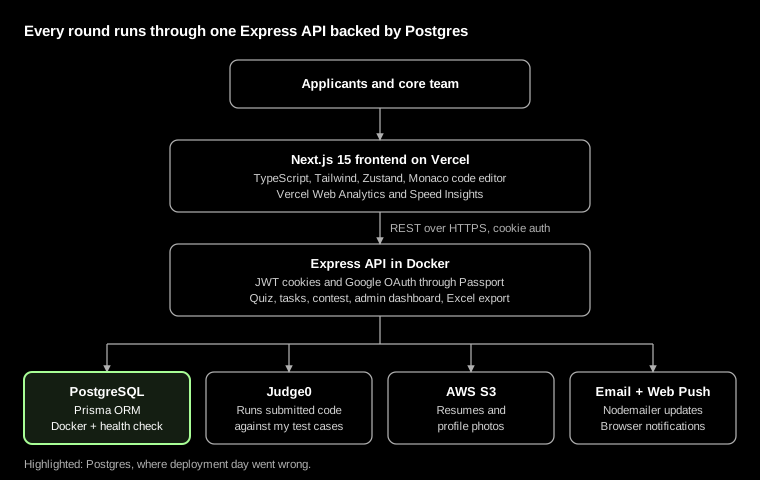
The API handles every round. It hands out quiz questions, stores task links, sends contest code to Judge0 and checks the output against test cases kept in the repo. Prisma defines the data in 11 models, including User, Question and ContestSubmission. Swagger documents the API at /docs.
The API and Judge0 ran on AWS EC2 in Mumbai, each on its own t3.medium instance. During recruitment week the API server's CPU never went above 3.5%, and the AWS bill for all of April 2025 came to 15.22 dollars.
 The API and Judge0 on separate EC2 instances
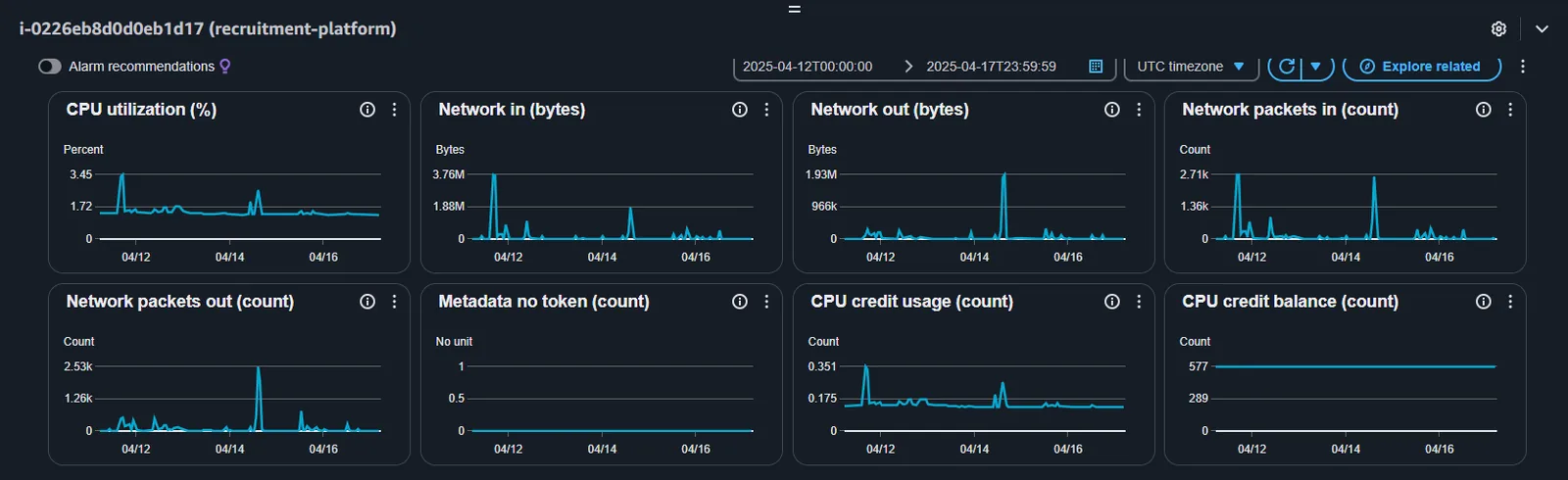 CloudWatch for the API server, 12 to 17 April 2025
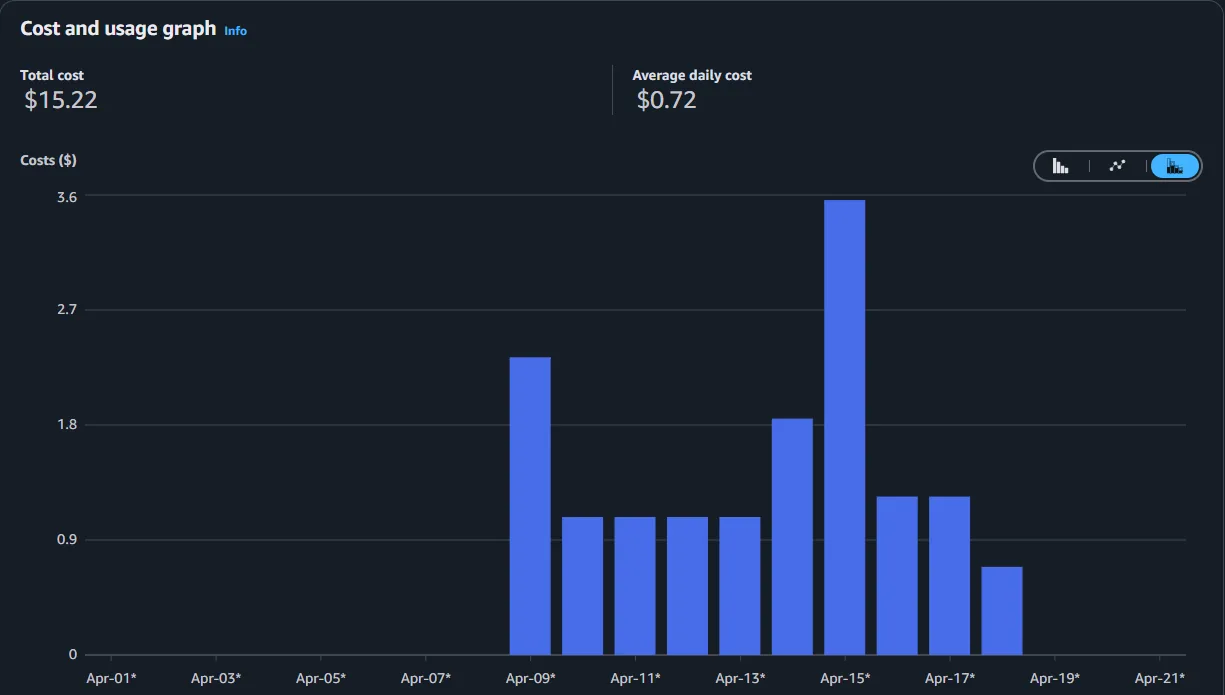 AWS cost for April 2025
During the drive the API and Judge0 ran on AWS EC2 in Mumbai, each on its own t3.medium instance. The API server's CPU never went above 3.5% that week, and the whole AWS bill for April 2025 came to 15.22 dollars.
The API and Judge0 on separate EC2 instances
CloudWatch for the API server, 12 to 17 April 2025
AWS cost for April 2025
The Postgres evening before launch
On 12 April 2025, about six hours before the quiz opened at midnight, the production database would not migrate. The fix took about 90 minutes and seven commits. The commit messages show how the evening went better than I can.
The problem came from four months of migrations. Between December and April I had collected 32 Prisma migrations, including two both named init, is_deleted_addition followed by is_deleted_addition_again, and two called password_not_optional. The day before launch, one of them dropped the quizTitle column while the schema still declared an index on it. The schema and the migration history no longer matched, and the production database would not migrate. Here is the backend log for that evening, in order:
| Time (IST) | Commit | What it did |
|---|---|---|
| 16:23 | fixed schema | Dropped an index on Question.quizTitle from the Prisma schema |
| 17:08 | removed all the migrations added new ones | Moved all 32 old migrations into a not-using/ folder and generated a single 253-line baseline migration |
| 17:15 | Fixed prisma | A whitespace fix to WORKDIR in the Dockerfile |
| 17:41 | FIxed fuckers | Commented out the entire Postgres service in docker-compose.yml |
| 17:43 | Fixed | Commented out the API's depends_on health check for the database |
| 17:50 | fixed u mf | Deleted the old migration files for good |
| 17:51 | Another fix | Put the Postgres service, health check and volume back exactly as they were |
I left the messages unedited. At 17:41 I tried running the API without its database container. Ten minutes later I put the container back.
Squashing the history fixed it. I replaced 32 incremental migrations with one baseline migration and applied it to an empty database. With the pg_isready health check back in place, the API waited until the database was ready.
I made two follow-ups:
- 15 April, 09:09 to 10:50. Contest scoring needed two new columns,
scoreandtimeElapsed. I regenerated the baseline and added adeploy.shscript that runsprisma generate, starts the containers and waits for migrations. I also added amigrationservice to Docker Compose that runsnpx prisma migrate deployonce Postgres reports healthy. After that, the deploy ran migrations itself, and I stopped running them by hand. - 28 August 2025. I redeployed the backend to EC2 against a database that sleeps when idle, so I added a
/wakeDbendpoint that runsSELECT 1through Prisma. I redeployed the frontend to call it on load, so the database wakes up before the first real request. That night took three more commits, includingFixed the prisma import.
500 students in six days
About 500 students used the platform during the April 2025 recruitment drive, and every round from quiz to interview ran on it. The whole cycle fit into six days:
| Round | Opened | Closed |
|---|---|---|
| Knowing You (aptitude quiz) | 13 Apr, 00:00 | 14 Apr, 00:00 |
| Task Round | 14 Apr, 00:00 | 16 Apr, 15:30 |
| Coding Contest (Programming) | 15 Apr, 14:15 | 15 Apr, 15:30 |
| Personal Interview | 17 Apr | 18 Apr, 03:00 |
The build took about 470 commits across the two repositories and 109 merged pull requests. The backend got 22 commits on 12 April, the day before the quiz opened.
Coming soon: a domain-wise breakdown, from registrations to selections.
What Vercel Analytics showed
The frontend shipped with Vercel Web Analytics and Speed Insights, so Vercel collected page views and Core Web Vitals during recruitment week.
From 11 to 15 April 2025 the site had 1,433 visitors and 12,067 page views, with a 17% bounce rate. Traffic jumped on the evening of 12 April, hours before the quiz opened at midnight, and stayed high through the quiz and the task round after it.
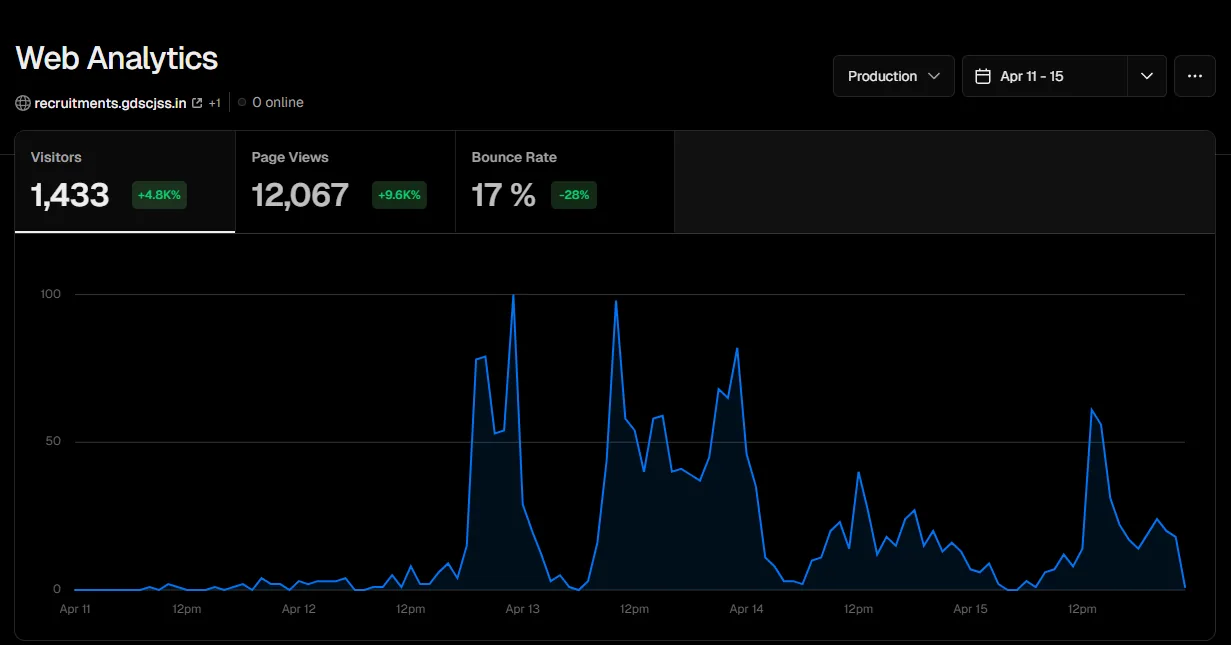 Vercel Web Analytics, 11 to 15 April 2025
The dashboard was the busiest page, with 2,800 views from 973 visitors, more than the landing page. Applicants came back to it between rounds to see what had unlocked. The aptitude quiz page had 925 views, the task round 469, and the first coding problem 223.
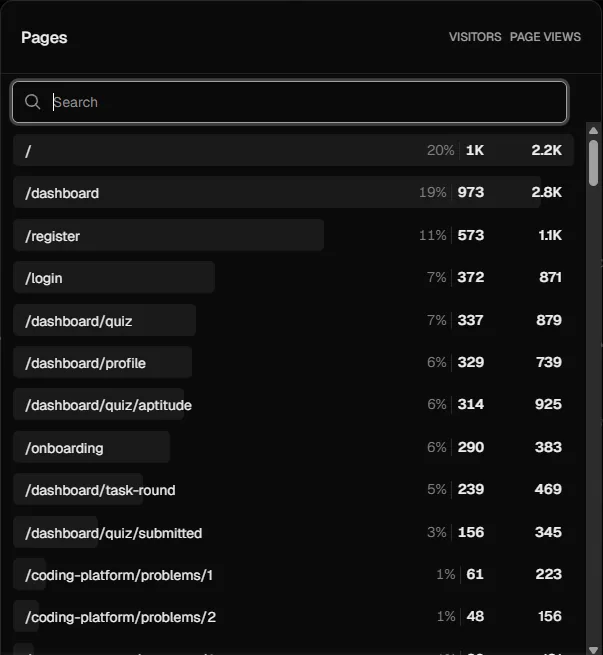 Top pages, 11 to 15 April 2025
Three in four referred visitors came from Instagram links. 97% of visitors were in India and 68% used a phone. Desktop visitors were only a third of the audience but made almost half the page views, 5,600 of 12,067, which fits the quiz and coding rounds being easier on a laptop.
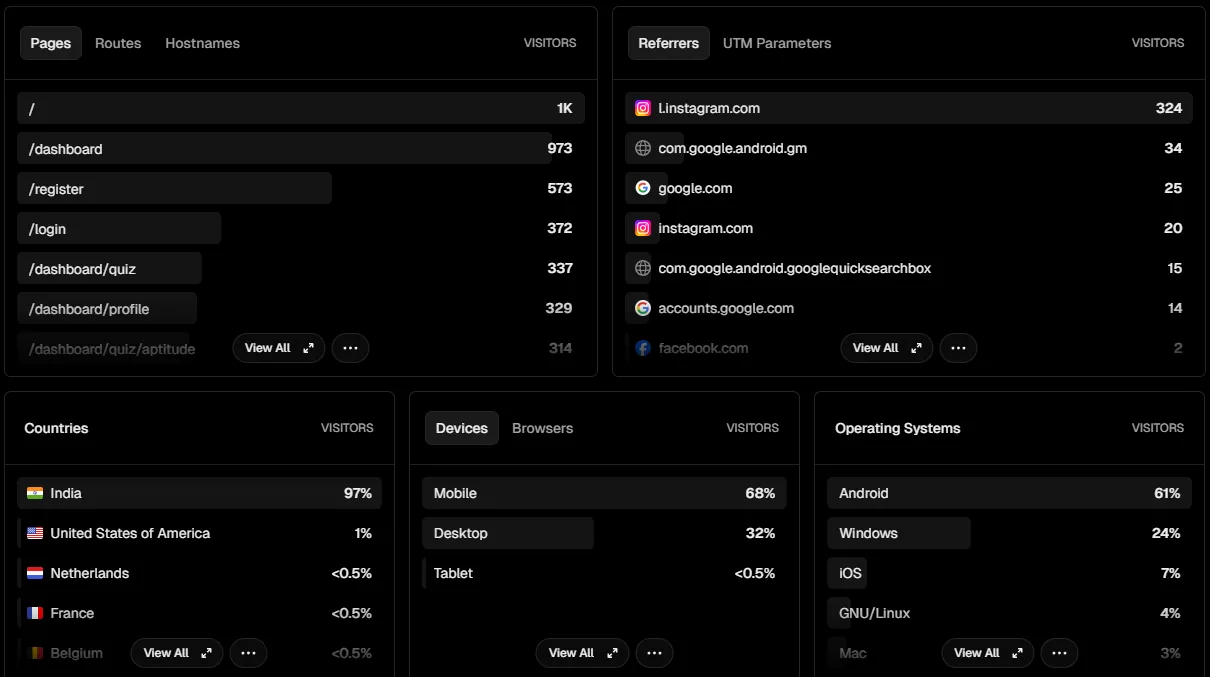 Where visitors came from and what they used
Speed Insights gave the site a Real Experience Score of 100 on desktop for 15 to 21 April. Largest Contentful Paint was 1.28 seconds, Interaction to Next Paint 88 milliseconds and layout shift zero. The only route under 90 was the quiz page, at 85.
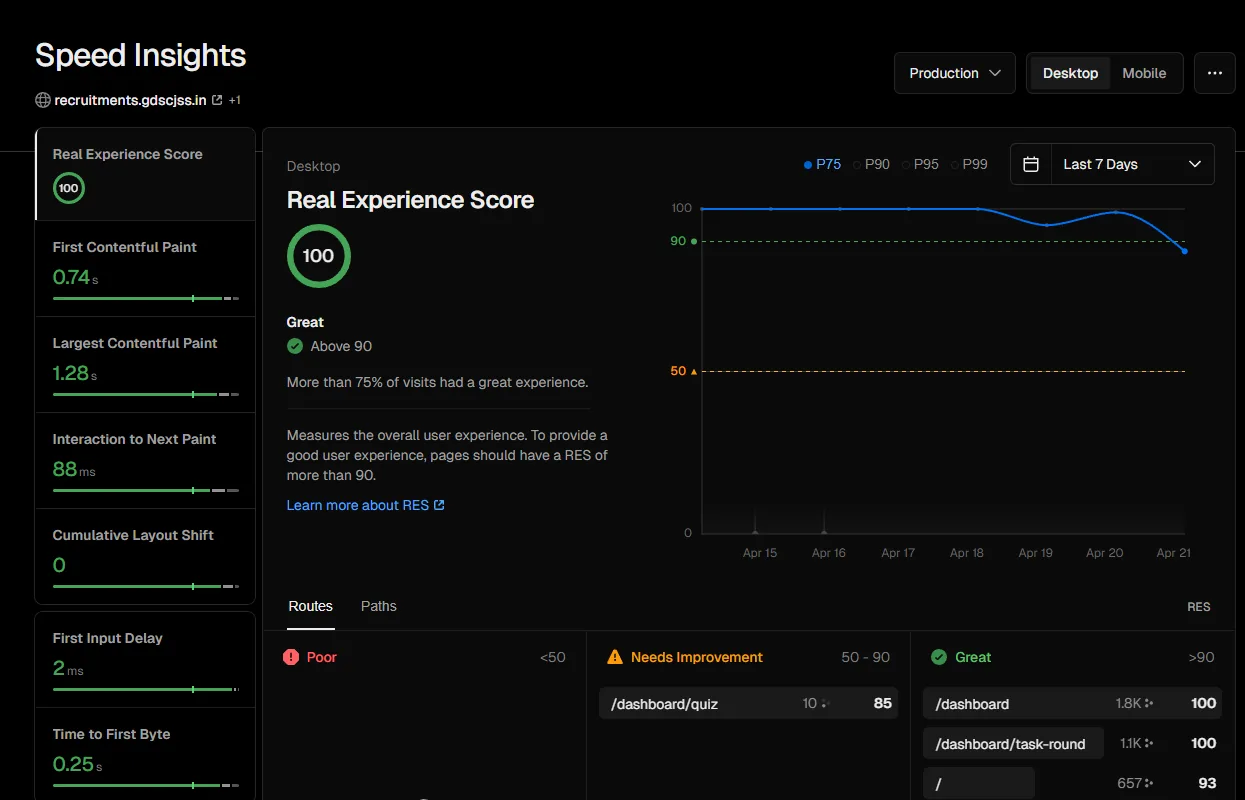 Speed Insights on desktop, 15 to 21 April 2025
In the 24 hours around the quiz, Vercel's firewall handled 58,000 requests and blocked 10 of them as DDoS mitigation.
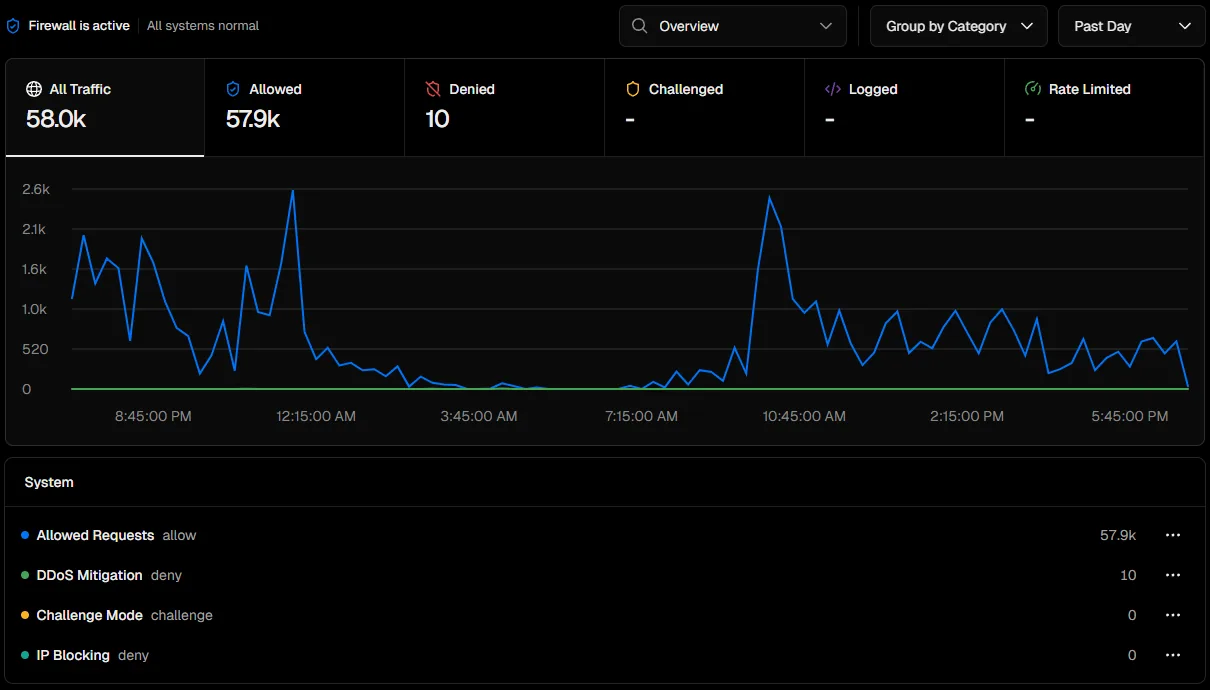 Vercel Firewall, 24 hours around the quiz
Where V2 fits in my journey
These are my projects so far, in order:
- Recruitment 2k24 (V1). My first production-level project after learning frontend.
- Course 21. A freelance build for a client.
- A startup, working on CloudX.
- Recruitment Platform V2. Live for about 500 students, with the coding contest V1 never had.
- Outlier. Contract projects.
What I learned
- Treat migrations as production code. Thirty-two migrations with names like
is_deleted_addition_againworked on my laptop and failed in production. Squash early, and runprisma migrate deployin CI or in a migration container from day one. - Deploy to staging first. A staging deploy a week earlier would have caught every problem from 12 April.
- Make health checks explicit. Postgres with
pg_isreadyplusdepends_on: service_healthykept the API from starting before the database was ready. - Plan for idle databases. A
/wakeDbping costs one query and saves a candidate from a cold-start timeout.
Screenshots
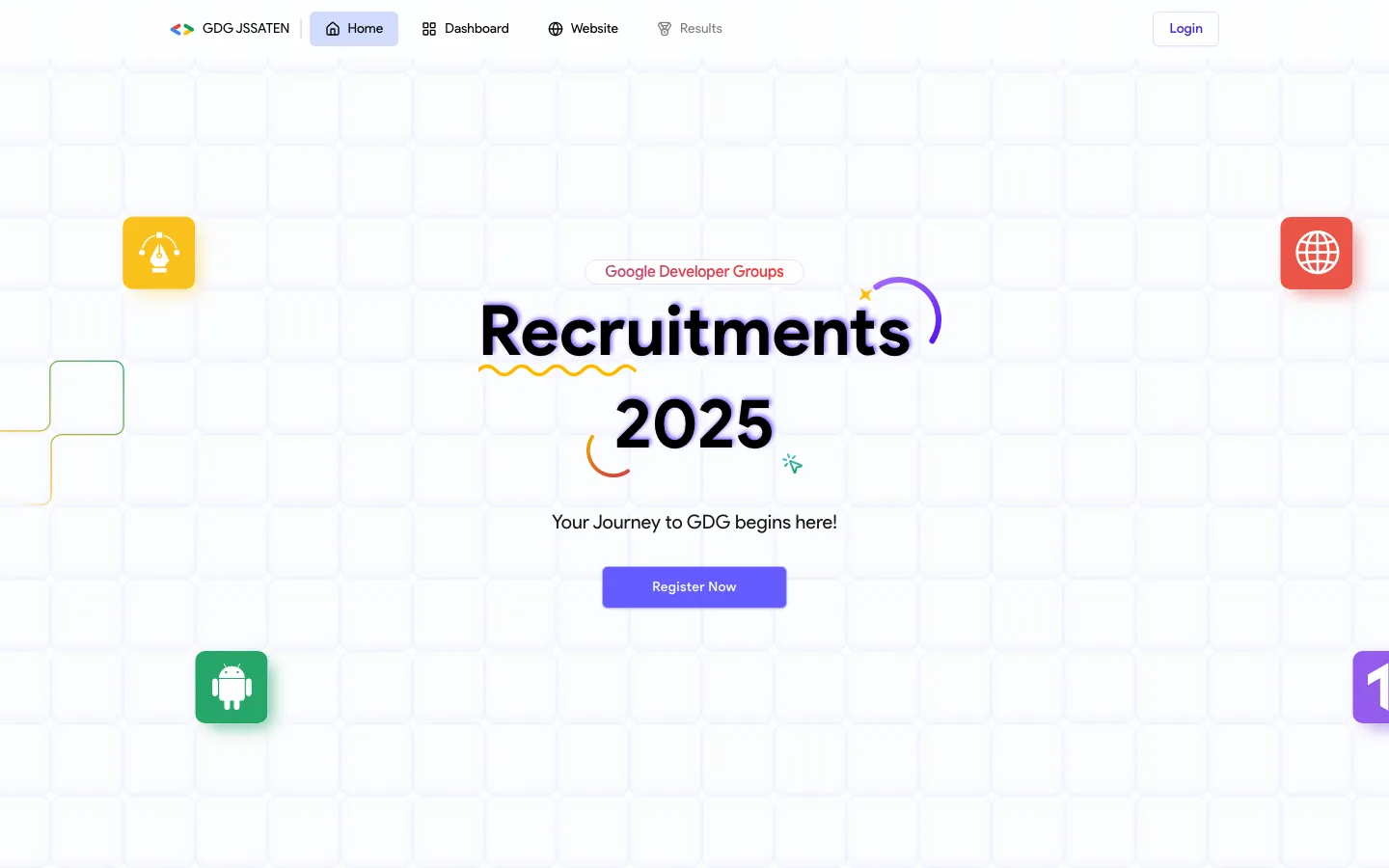 The landing page
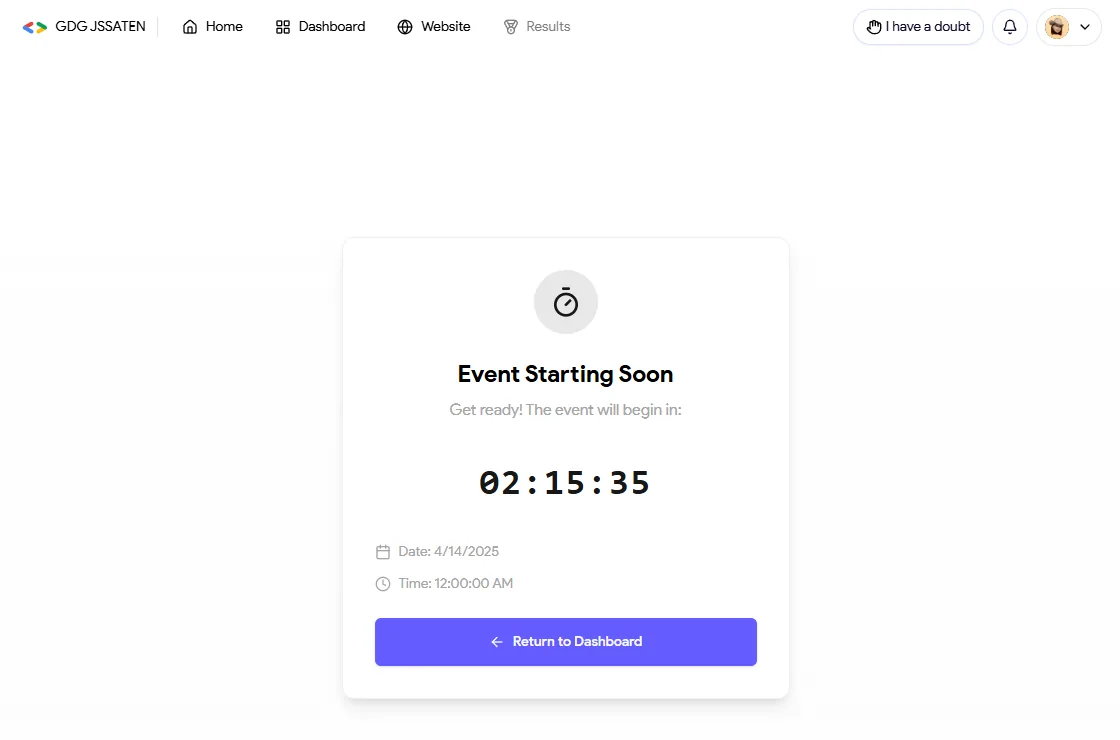 Quiz countdown, applicant view
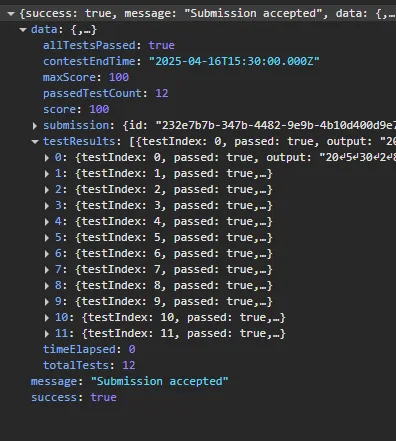 A contest submission judged against 12 test cases
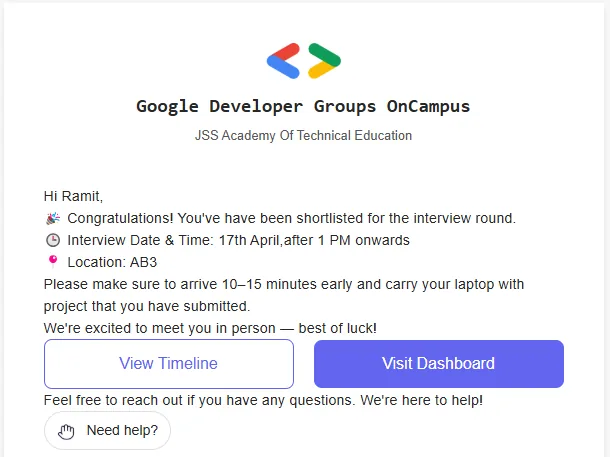 Interview shortlist email
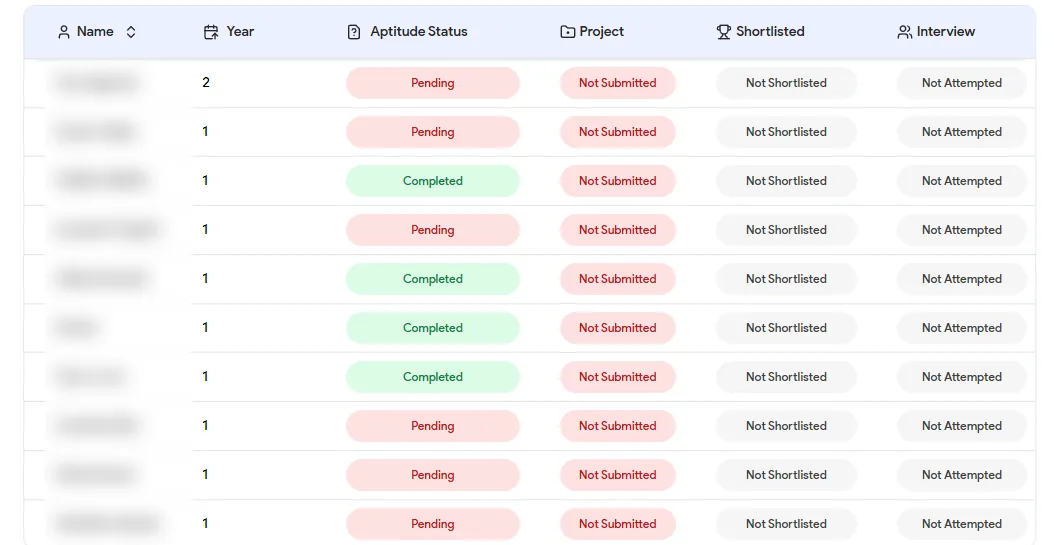 Admin applicant table, names blurred